
Why Your Painting Feels Flat: It's Value, Not Color
Quick answer: If a painting feels flat or lifeless, the problem is almost always value (how light or dark something is), not color. To create the illusion of light, you need dark values surrounding it — light only reads as "light" in contrast to dark. Beginning artists often jump to color too early and miss this foundational step.
Why You Need Dark Values to Create Light
As artists, we are illusionists. We take raw paint and create an effect. One of the simplest and most important rules in painting is this: you need a dark value in order to create the effect of light. If you don't have dark values surrounding your light value, the light won't "light up."
If your painting isn't popping, it's due to one (or both) of these issues:
Your light values aren't light enough
Your dark values aren't dark enough
Example: Painting a Glowing Moon
To paint a moon that appears to glow, you need enough dark value around it to average out the scene — just like the actual night sky. The darks have to reach a certain threshold, or the glow won't read correctly.
It's not complicated in theory, but it takes practice to execute on canvas.
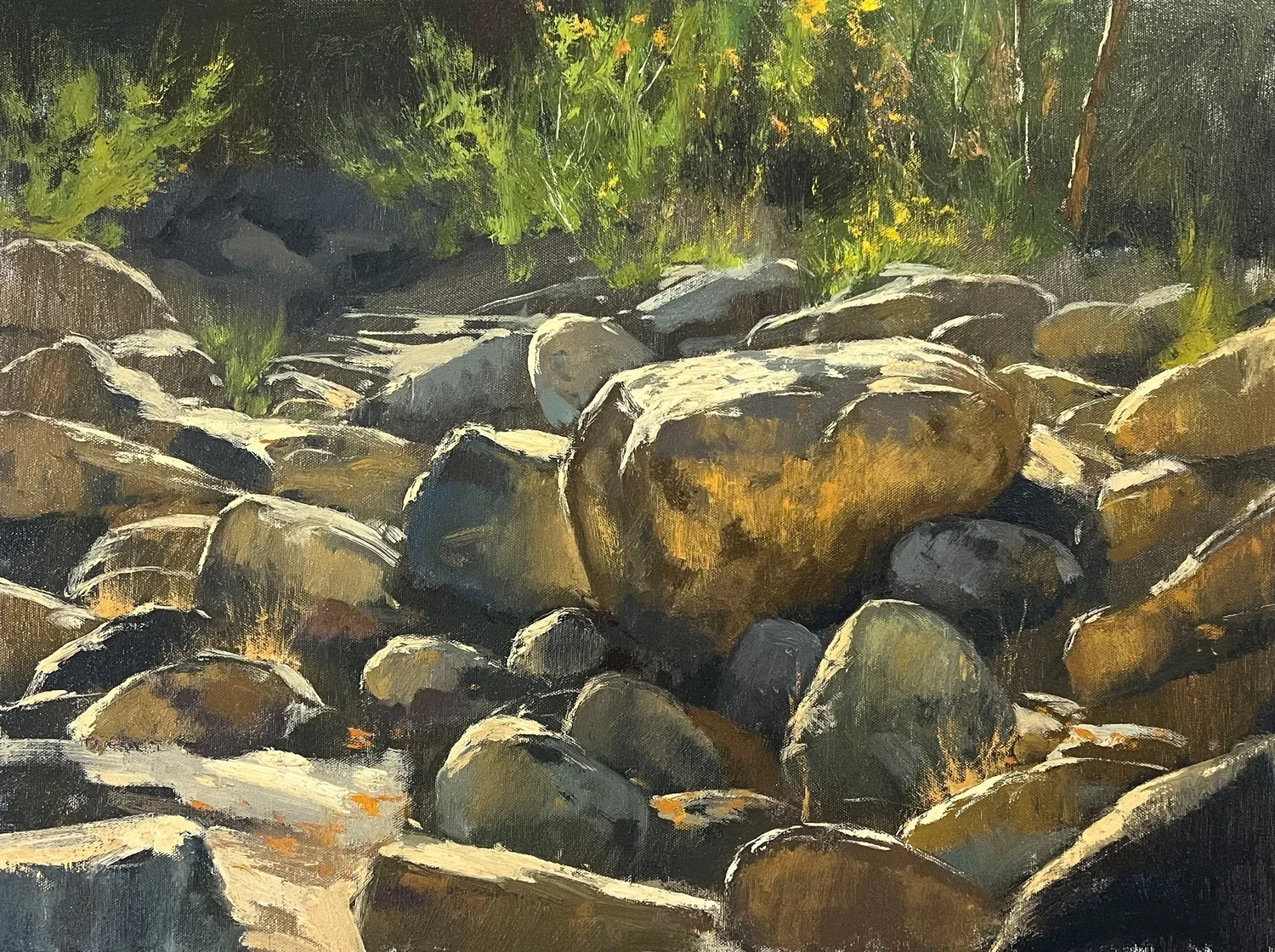
Example: Painting a Lit Rock Face
The same principle applies to rocks. A rock face appears "lit" by light because it has a shadow or dark side next to it. Without that shadow, the lit side has nothing to contrast against — and the light won't register.
Example: Painting a Figure Under Artificial Light
If you're painting a model lit by artificial light and want to accentuate a specific area of the figure, you need to include varied edges and shadows around it. Values, not color, are what make the lighting effect convincing.
Values Come Before Color
Understanding value is essential before you move on to color. Color usually isn't the actual problem — value is. This is easy to miss when painting something like a moonrise: the instinct is to reach for color, when the real issue is the value structure underneath it.
Common mistake: Beginning artists jump into color too quickly, then get confused about why the painting isn't working — when the real issue is unresolved values.
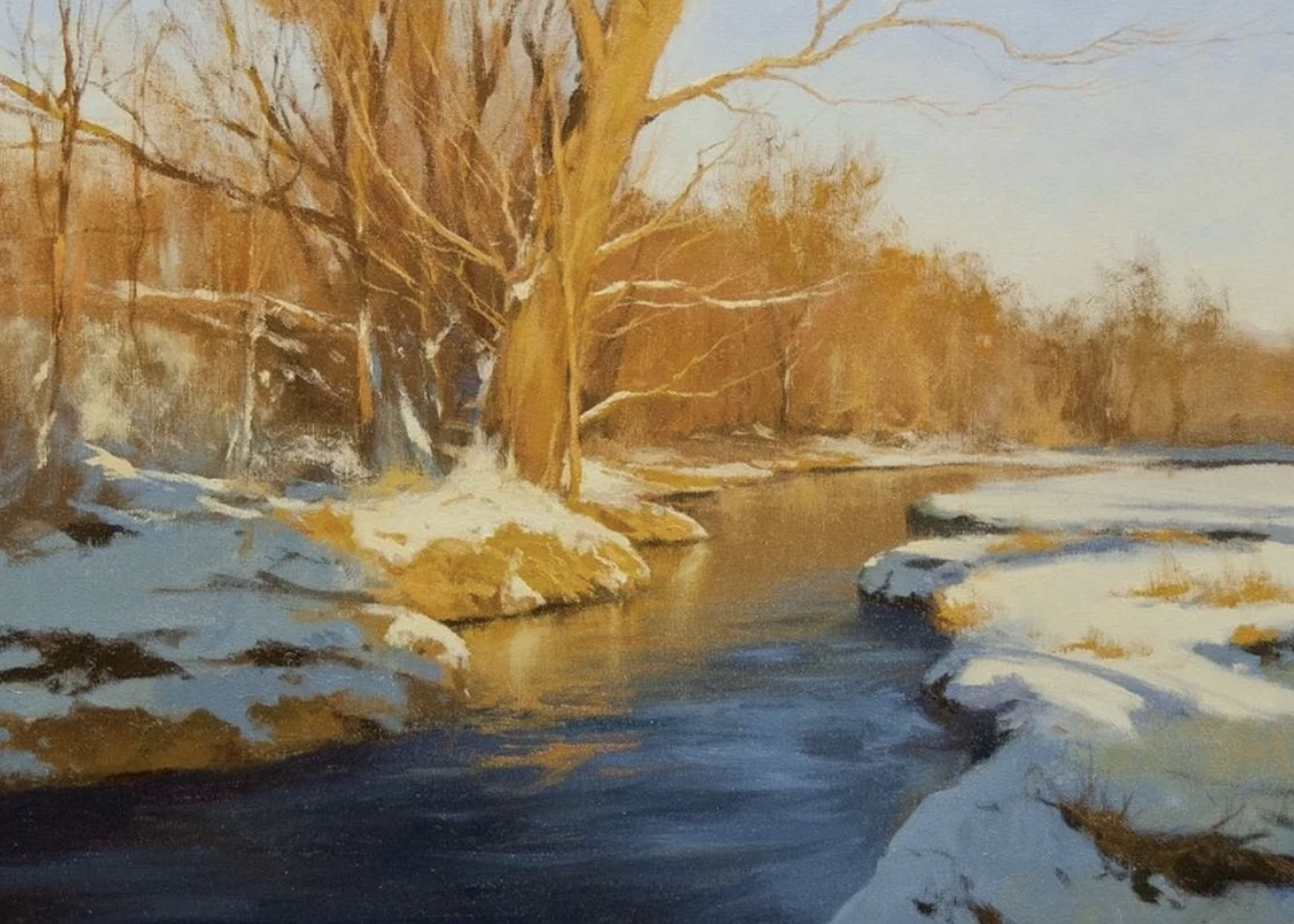
How to Practice Value: A Simple Still Life Exercise
If you can't paint outside, set up a simple still life:
Find basic blocks or spheres (a toy section works well)
Set them on a white surface
Light them in the studio
Paint them using only black and white paint
This exercise teaches you a huge amount about value in a controlled, low-pressure setup.
The Best Way to Learn Value: Paint From Life
Direct observation is the best way to get a better understanding of value. Whenever possible, go outside and paint from life. Studio exercises are useful, but observing real light and shadow firsthand builds the deepest understanding of value.