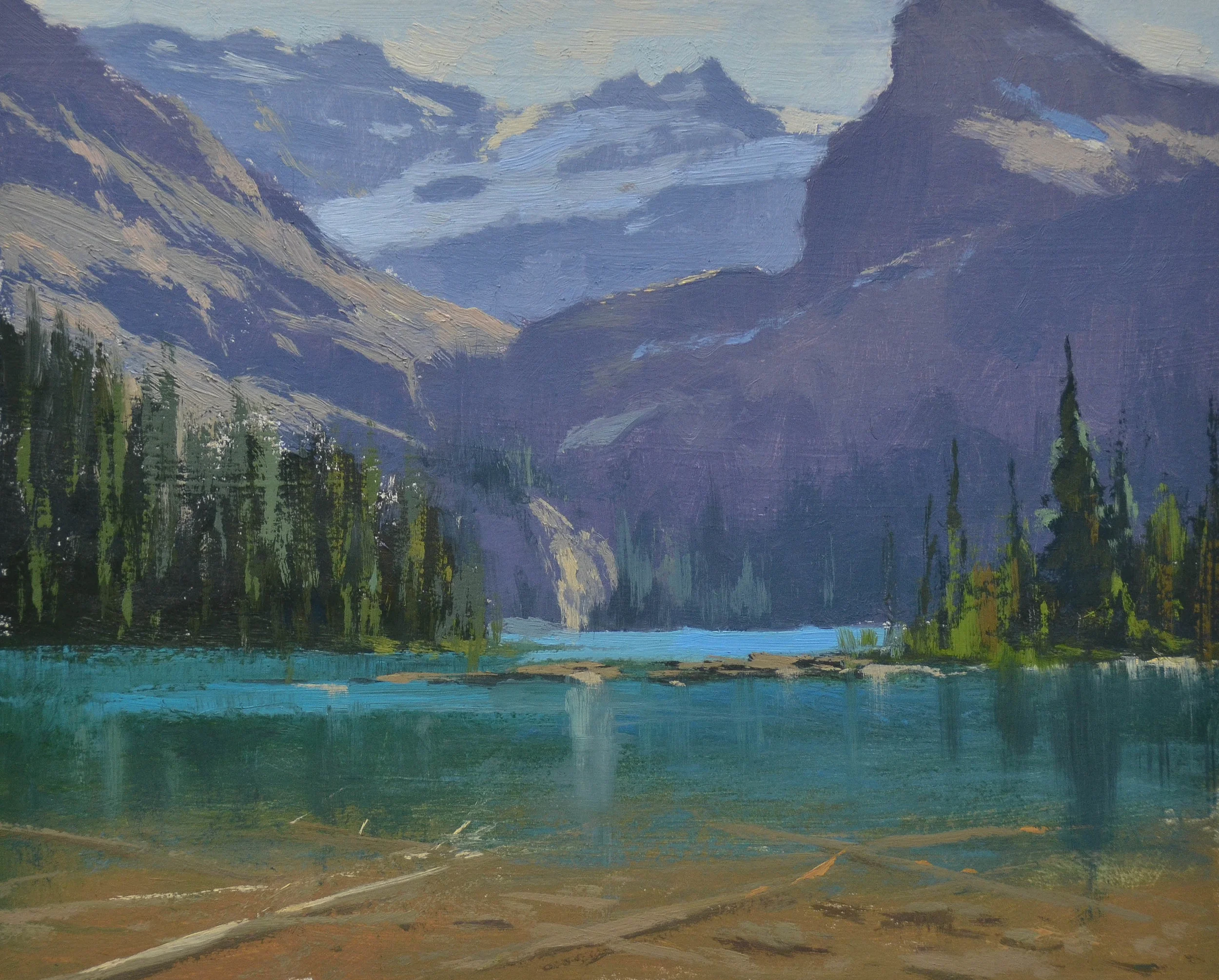
I begin by identifying where the light comes from, then look at what it does to the shadows. In these painting examples, shadow length, shape and edge quality all help explain the light and the surfaces it crosses.
Read the direction and length
In the first example, I identify a low morning sun and the long shadows it produces. I compare this with another scene where extended shadows are an important part of the arrangement.
Before painting a shadow, I want to know where it belongs in relation to that light. The direction is a practical starting point for the rest of the decisions.
Follow the surface
I point to a shadow that curves across a building and to curved shadow shapes on a tree trunk. Those changes help describe the form receiving the shadow. On the flatter ground in another example, the shadow follows a much flatter path.
I also look at perspective. Shadows across the ground do not all appear at the same angle on the picture surface. In the road scene, I compare their changing directions as they recede.
Compare the edges
Using digital changes, I make selected shadow boundaries harder and switch back to the original. The comparison shows how an overly firm edge changes the effect in these passages.
I relate the softer edges shown here to the separation between the casting object and the surface receiving the shadow. My aim is to observe those differences consciously. Light direction, receiving form, perspective and edge quality work together in the examples, so I want to check each before settling on the final shadow shape.
Continue with Shadow Source and Planes of the shape.