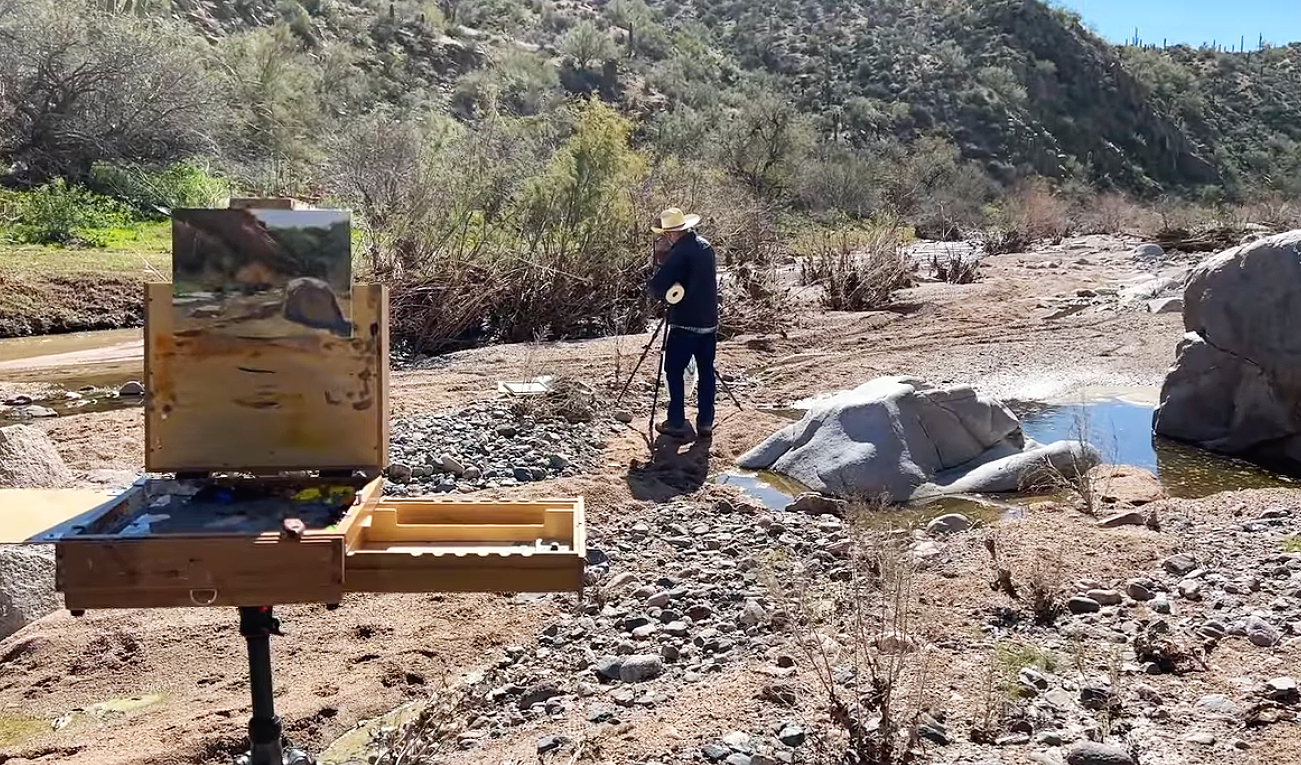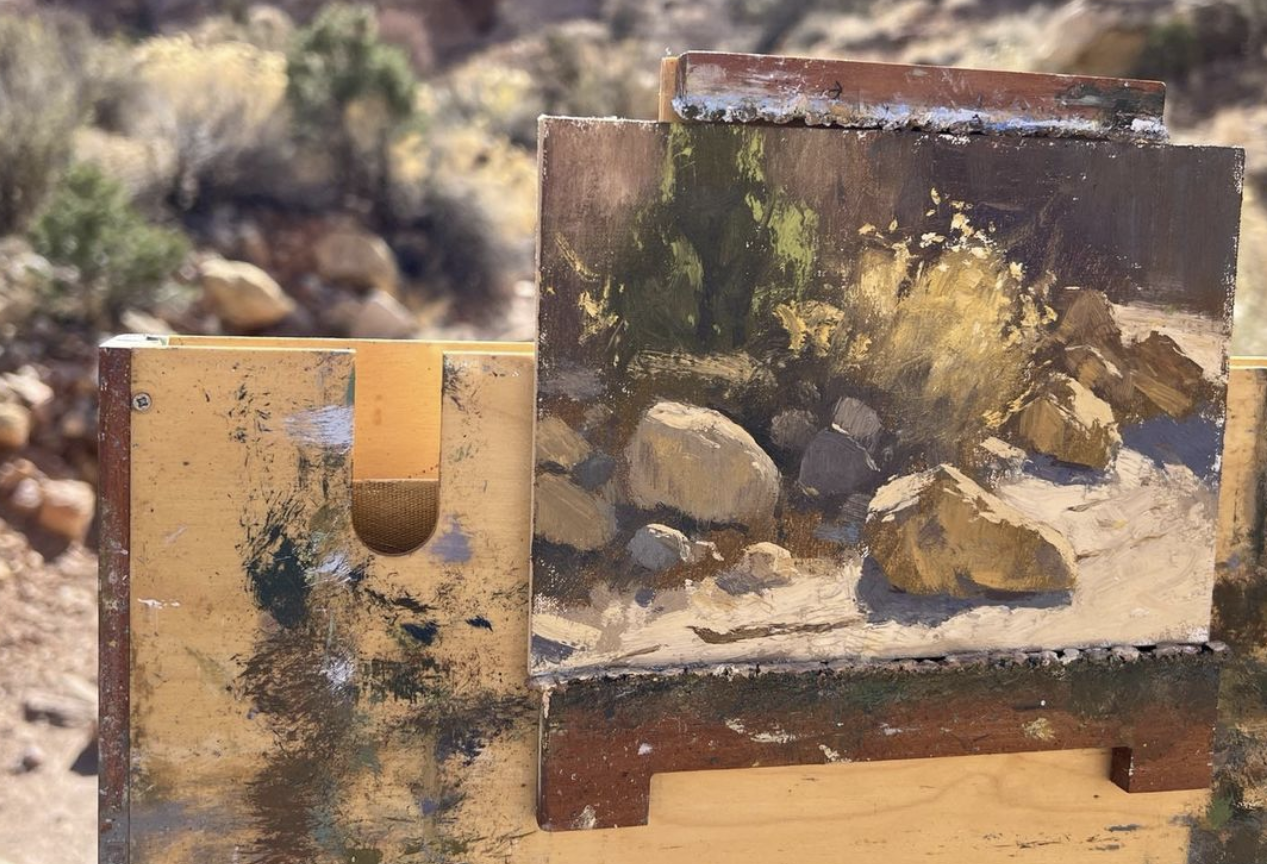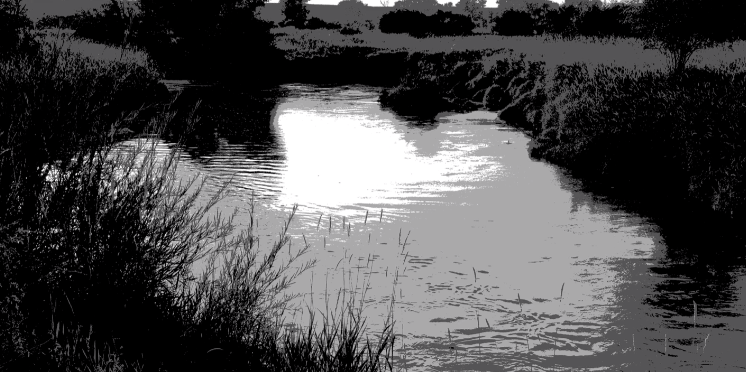
Before becoming absorbed in a landscape’s color, I look for its large shapes and a small number of broad value groups. This demonstration shows that way of seeing by switching a river photograph between color, black and white, and a simplified value version.
Reduce the scene to its main groups
The computer version breaks the scene into about four values. I use that simplification to explain the broad structure I look for before beginning a painting. The original photograph contains many small changes, but I do not need to treat each one as a separate statement at the start.
Squint to quiet the detail
I ask you to keep squinting while I switch between the versions. Squinting reduces the amount of detail and the prominence of color, making it easier to compare the larger light and dark areas. The images differ in their small information, but their broad value structure remains recognizable.
Bring color into a clear arrangement
I am not literally seeing the world through a digital filter. The edited image is a way of illustrating how I organize what is there. Once those shapes and values are clear, I can consider the color more fully as the painting develops. As you watch the changes, try following the light river shape against the darker banks and trees. That large relationship is useful before I describe the grasses or other small details.
For a related lesson, see seeing abstract shapes.