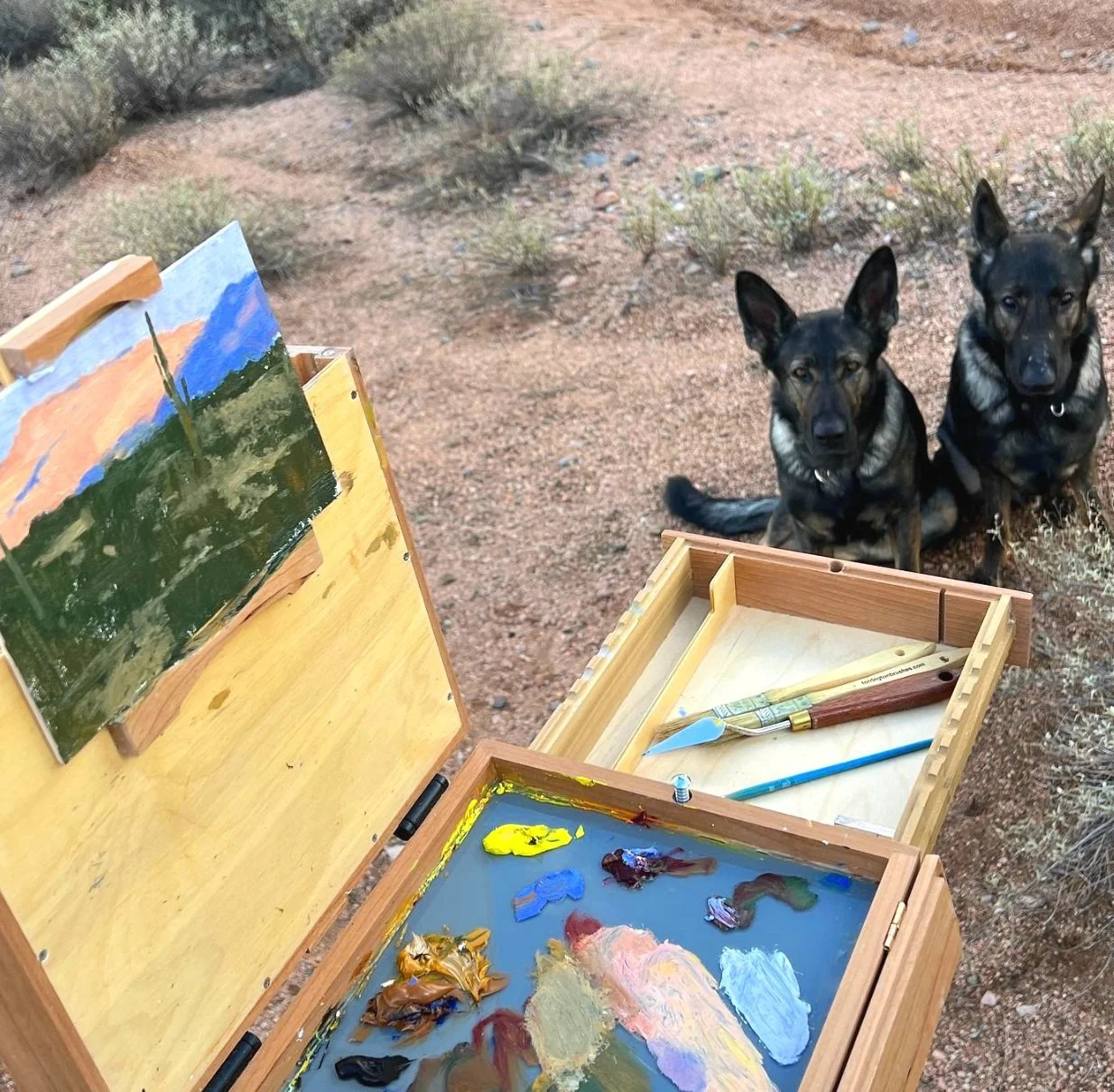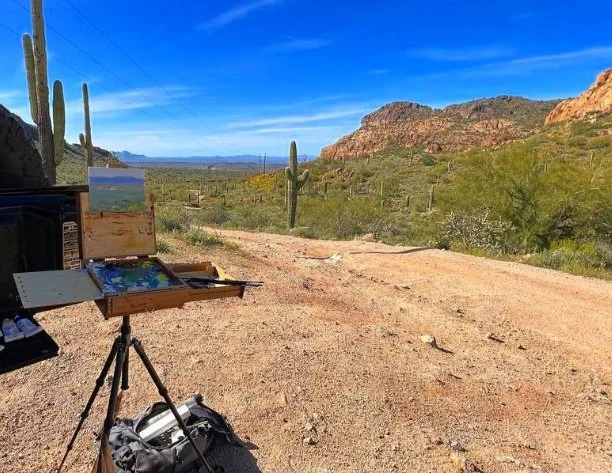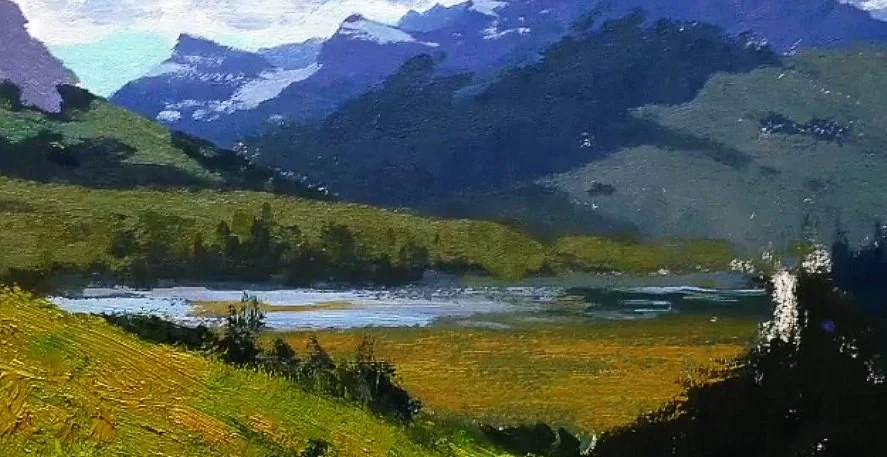
I simplify a landscape by establishing its large shapes and carrying them through the painting. In this study on paper, I show three stages to explain how I add information without losing the original arrangement.
Set the value limits early
The mountain and the darker foreground give me an initial range to compare. I put in the darkest dark near the bottom, then judge the middle values against those beginnings. That helps me place later passages while keeping the main shapes clear.
Develop the painting without breaking everything apart
As I cover more of the surface, I continue to preserve the broad divisions. The mountain stays relatively close to its original statement. I avoid adding many sharp value shifts in that distant area because they would pull attention toward it. More variation can belong in the foreground, where I am comfortable holding the eye.
Use the trees to strengthen the design
In the final stage, the vertical pine trees interrupt and support the landscape’s horizontal movement. Their dark values also help the lighter areas fall back. The trees receive more description, but they do not require the entire background to become equally detailed. Whether I am outdoors facing an overwhelming amount of information or in the studio with time to keep adding, I want to remember what made the large design work in the first place.
For a related lesson, see leaving room for mystery.