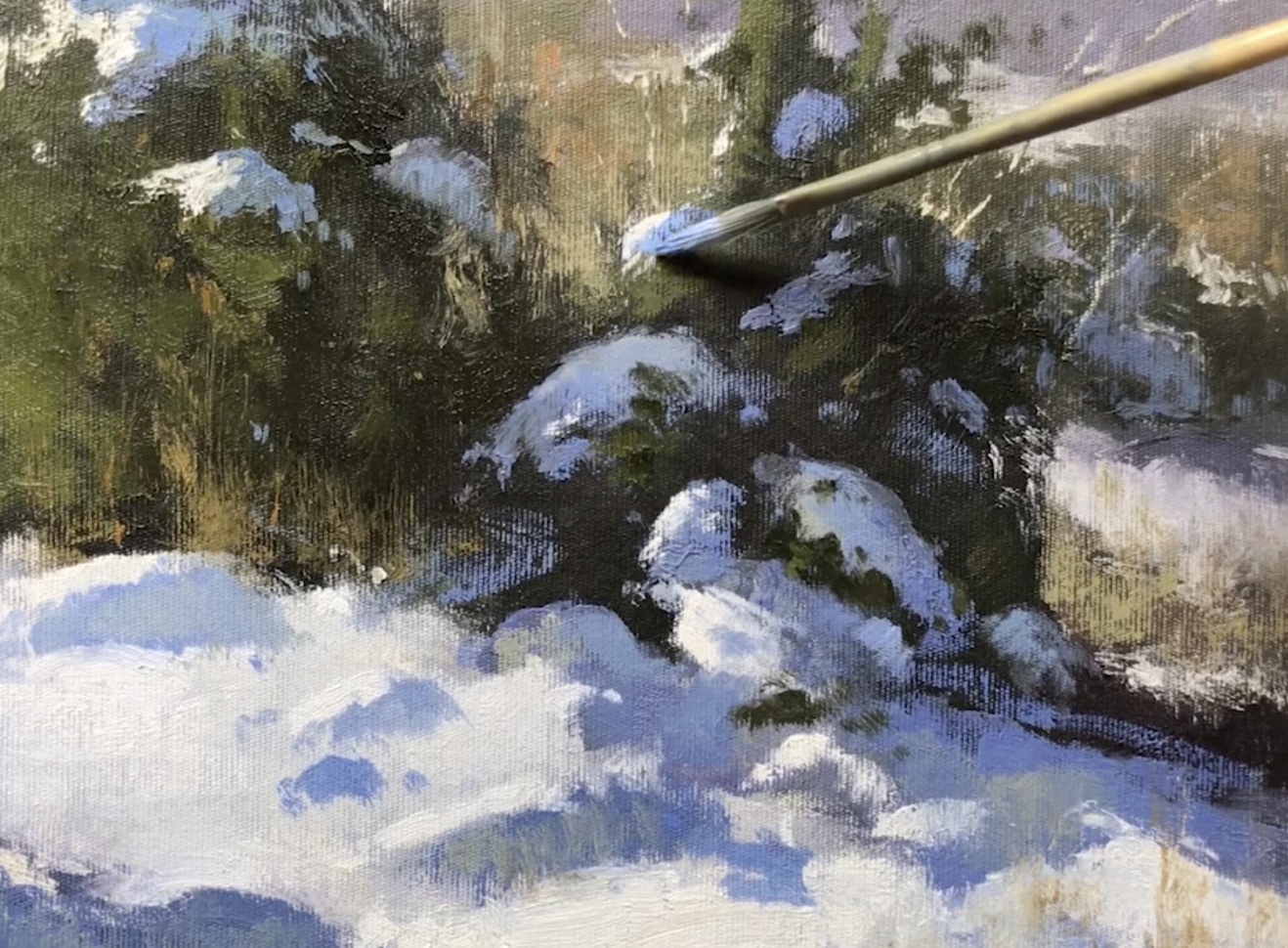
A small change in value can separate two overlapping planes. In this snow painting, I add just enough lighter snow along part of a pine tree to distinguish it from the background.
Find where the shapes merge
Before adding the final notes, I point to the left side of the pine. When I squint, its value is very close to the area behind it, so the two shapes merge. That is the specific problem I want to address. I do not need to rework the entire tree to make that boundary clearer.
Add the snow selectively
I gently place a few lighter notes along the edge. I mix a little yellow ochre into the snow rather than using only pure white, and consider cooler snow underneath on the shadow side. The main point, though, is the lighter value and the separation it creates.
Avoid tracing the whole outline
I do not connect every mark or put snow everywhere around the tree. Leaving interruptions gives the edge a more organic feeling. Watch how little paint is required before the tree begins to stand apart from the background. In this demonstration, the value relationship does the essential work; color contributes to the notes, but it is not the first problem I am solving. The final adjustments serve the existing painting rather than describing a completely new shape.
For a related lesson, see keeping values close within shadows.