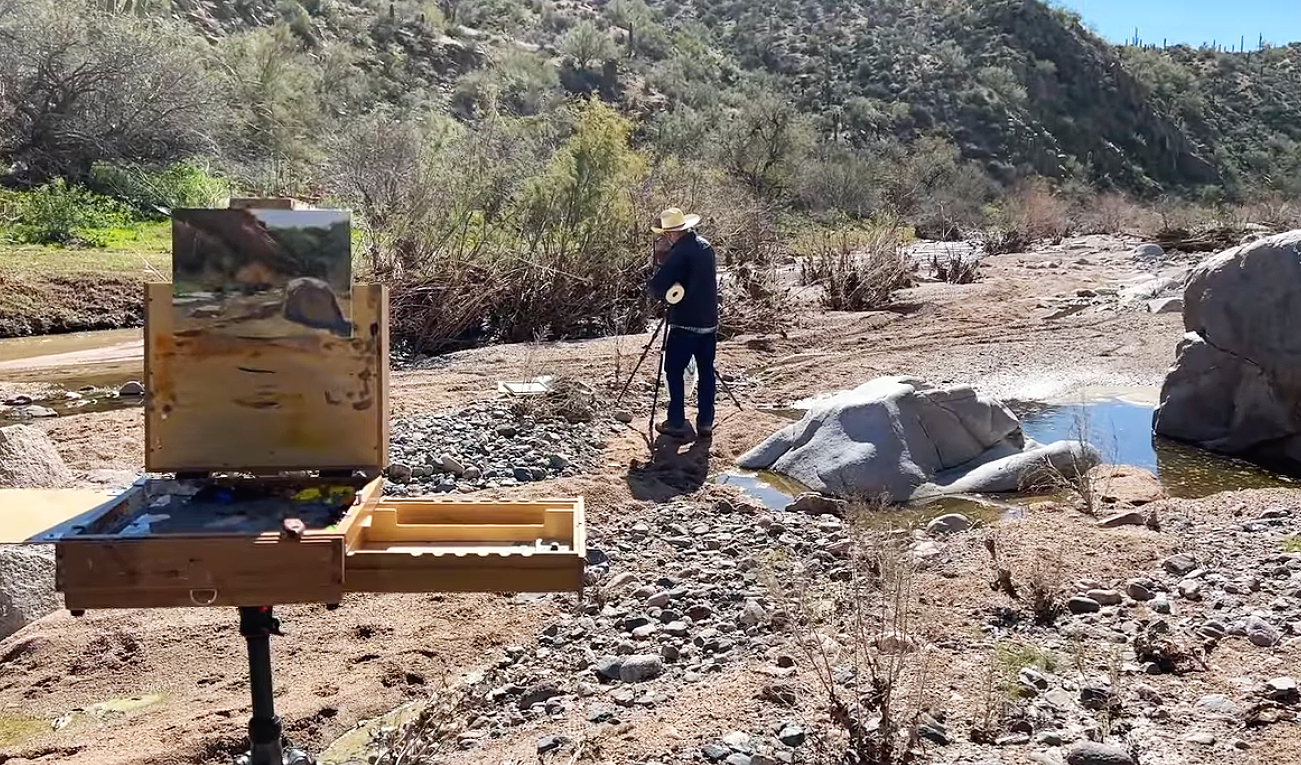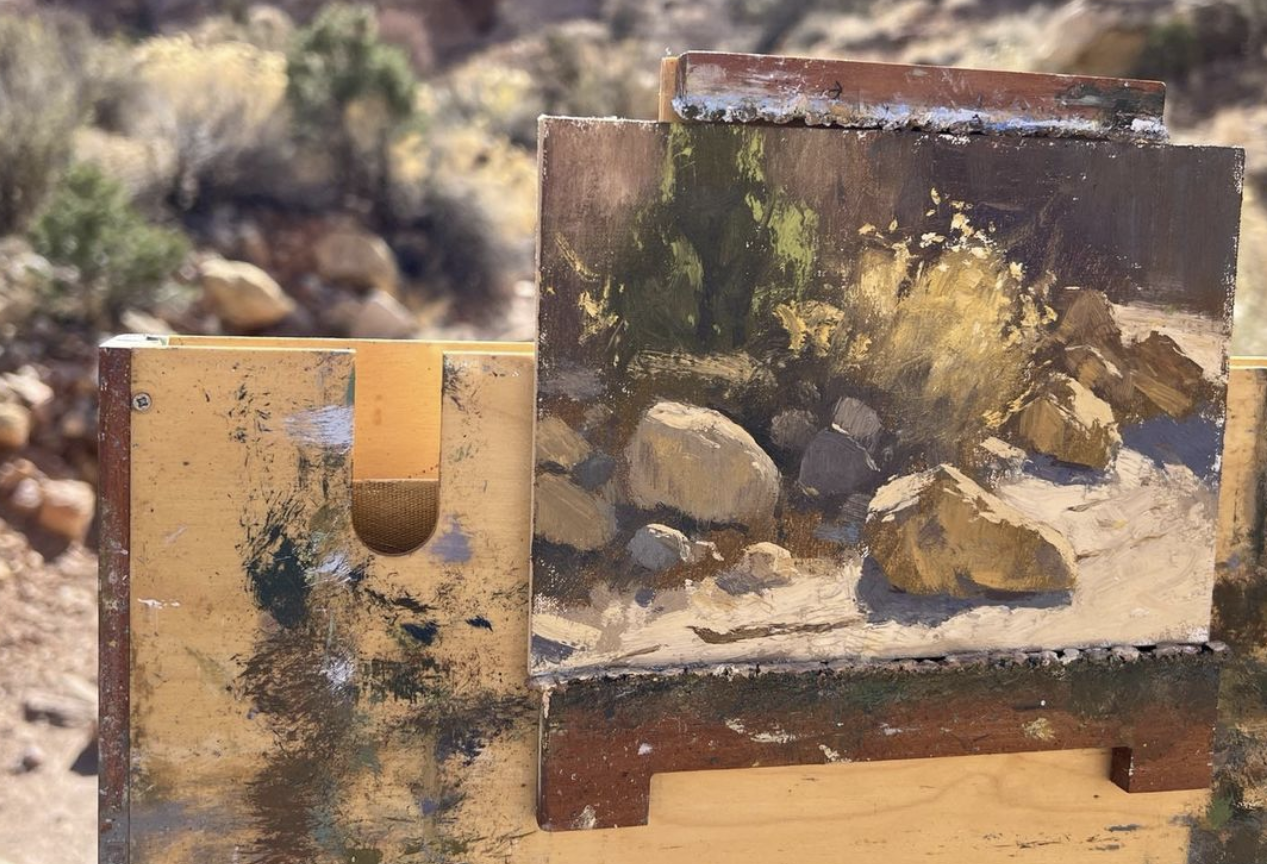
A dominant foreground shape can give the eye an anchor and help the landscape behind it feel farther away. In this painting, I make that shape both larger and darker than the other foreground forms.
Let one shape hold attention
The upright green shape is the clearest foreground presence in this example. Its size and value work together to make it dominant. Other paintings might use value alone to establish that importance, but here both qualities are doing the work.
I use it as an anchor for the viewer. It holds attention while the mountain remains behind it. The contrast helps establish both a focal area and a sense of distance within the small painting.
Compare it with the surrounding shapes
The foreground also has more vibrant color, but my main point in this clip is the relationship of the shapes and values. Look at the strong foreground form against the lighter mountain, then compare it with the smaller shapes around it.
This is one design option I sometimes use. When it suits the subject, a dominant foreground shape can organize the picture clearly. I would consider what I want the eye to settle on and whether the surrounding forms support that choice.
Continue with Pick a dominant shape and Surround Your Subject with Values.