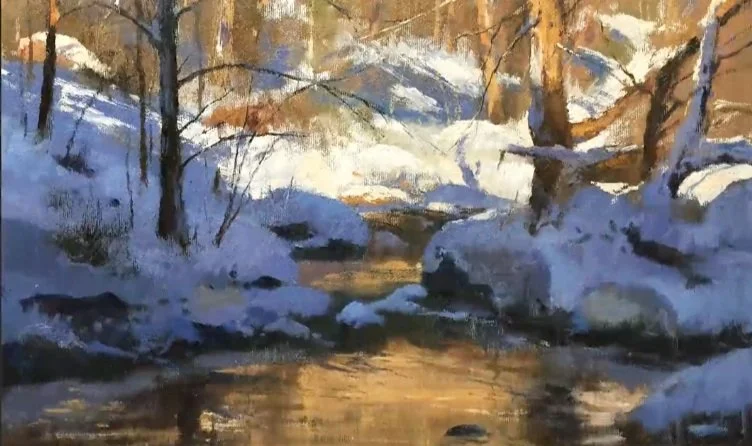
For this snowy stream painting, I removed many small branches and background details so the light and water could carry the story. The amount of detail I kept was a choice about the painting I wanted, rather than a count of what appeared in the photograph.
Identify the attraction
The reference drew me in because of the light, the snow and the reflection in the water. Back in the studio, I could also see how many little branches and other interruptions were scattered through it.
Those details belonged to the place, but they did not all need equal attention in the painting. I wanted a clearer main area, with the water playing a supporting role.
Compare the painting with the photograph
In the side-by-side view, you can see how much simpler the painted background is. I removed smaller branches and used broader, simpler strokes. I also warmed the color to emphasize the feeling of warm light falling across the scene.
The photograph gave me the inspiration; I still had to decide how to translate it. This takes practice and trial and error. Looking back at your own work can help you ask whether you are keeping useful information or overexplaining the subject. In this example, taking things out helped me say what first attracted me.
Continue with How to Simplify Busy Scenes and Why You Should Pay Attention to Patterns.