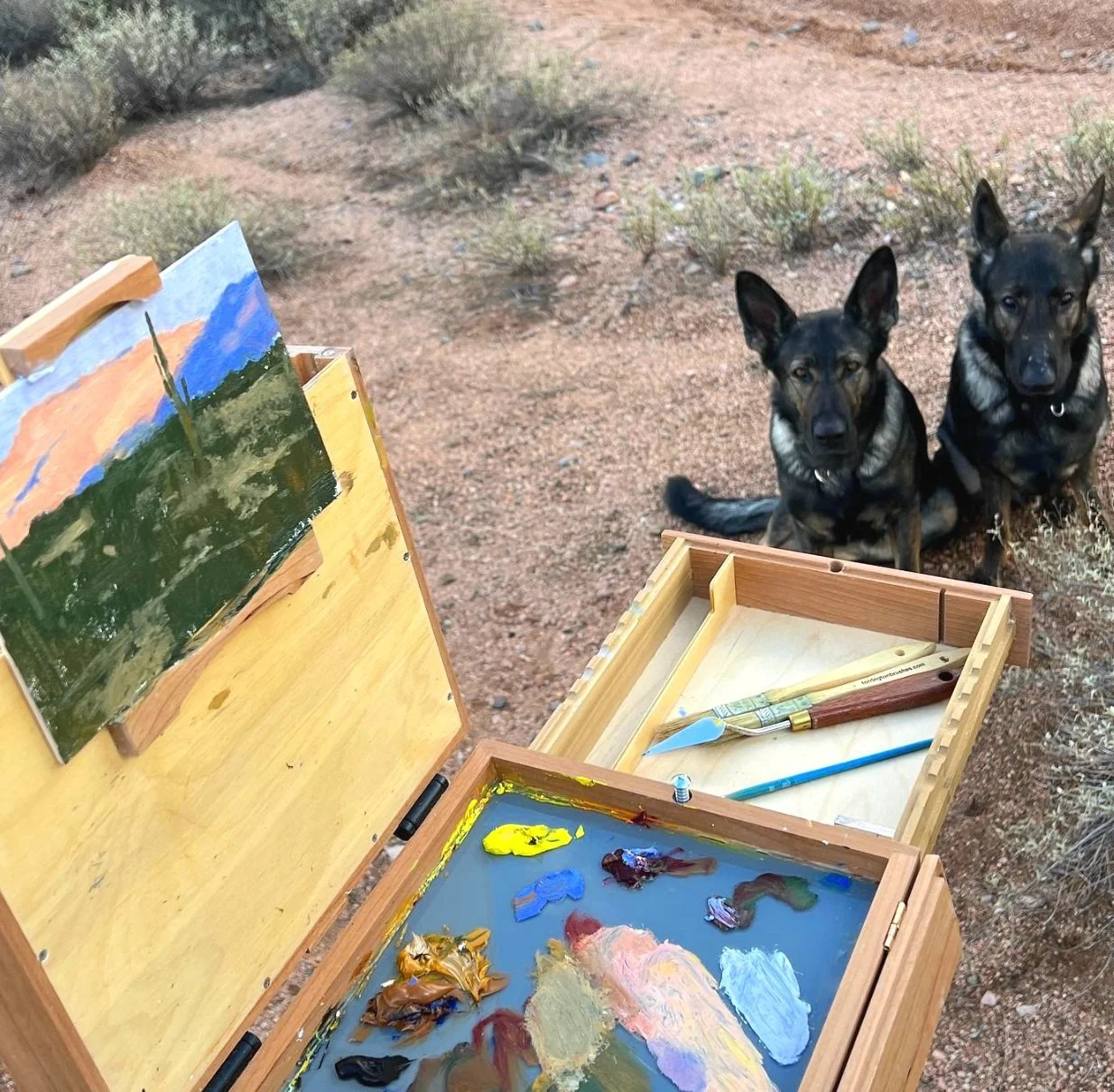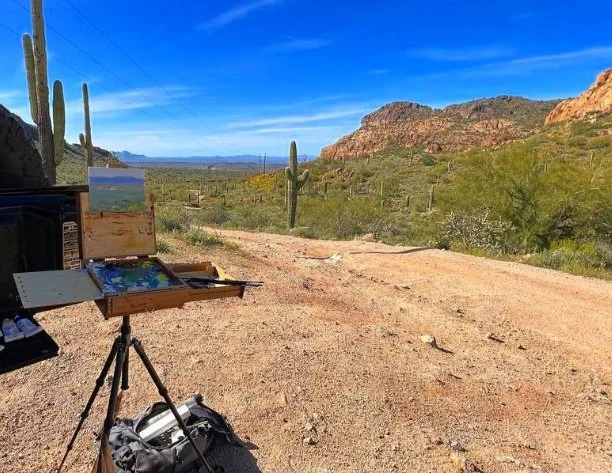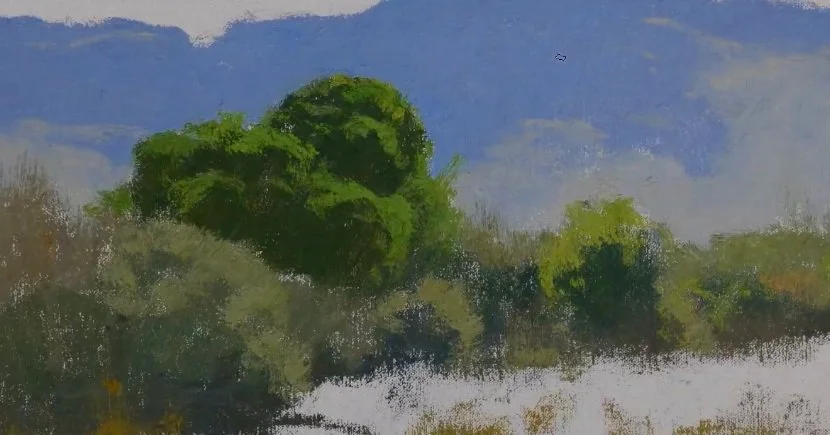
In this outdoor painting, I keep the sunlit ground lighter than the initial block-in because of the amount of light it receives. I use the stages of the painting to show how that horizontal plane develops.
Read the direction of the light
The light on the tree helps establish the sun’s angle. In this situation, the sun is fairly high, so the open ground receives a great deal of light. A common problem I see is leaving that plane too dark. I want its value to relate to the lighting in this particular landscape.
Build from the darker beginning
I start the ground darker than I intend to finish it. Some of that darker paint will remain visible underneath and between later passages. As the sequence advances, the shrubs gain definition and the foreground becomes lighter. The early darker stage is a beginning that gives me something to work over.
Leave room for the last light notes
Even the later foreground is still some distance from white. I compare it with white on screen to make that clear. Keeping that room allows me to add a lighter patch if the painting needs it. Starting too light would limit those choices. As you watch the stages, follow the ground rather than the details of the tree, and notice how its value changes while the light direction stays consistent.
For a related lesson, see seeing subtle value changes.