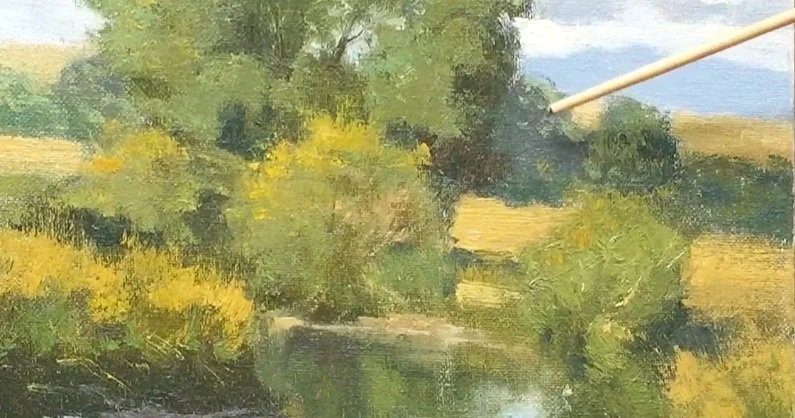
In this painting, I create depth by changing the greens from warmer notes in front to cooler notes farther back. I compare the mixtures to one another so the green passages do not all occupy the same space.
Notice the different greens
Green can take on quite different temperatures. In the background passage I discuss, I used more blue and white than in the nearer greens. That cooler mixture helps the area appear to recede in this particular painting.
The foreground mixtures lean more toward yellow and yellow ochre. As I point farther forward, I identify a passage with more yellow again. The contrast between those mixtures is what I want you to notice.
Judge the relationship in the painting
I am describing how I handled these greens, rather than giving one fixed mixture for every landscape. The useful comparison is between the cooler background and warmer foreground in front of you.
When you are working on a similar green landscape, pause before using the same mixture throughout. Ask whether a passage belongs nearer or farther away, and compare its temperature and value with the surrounding areas. In this example, the shifts help the space read while keeping the scene full of greens.
Continue with Adding right value relationships and Why Values in Mountains Have to Be Close.