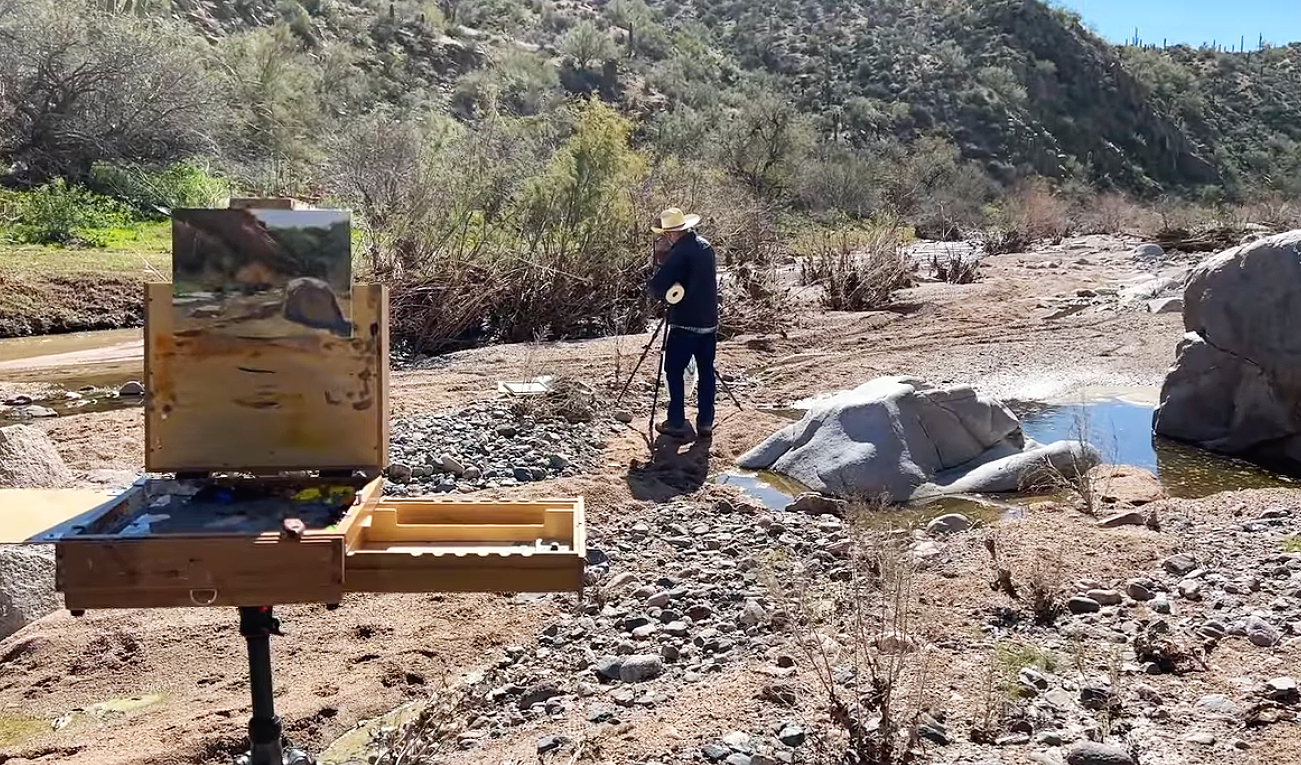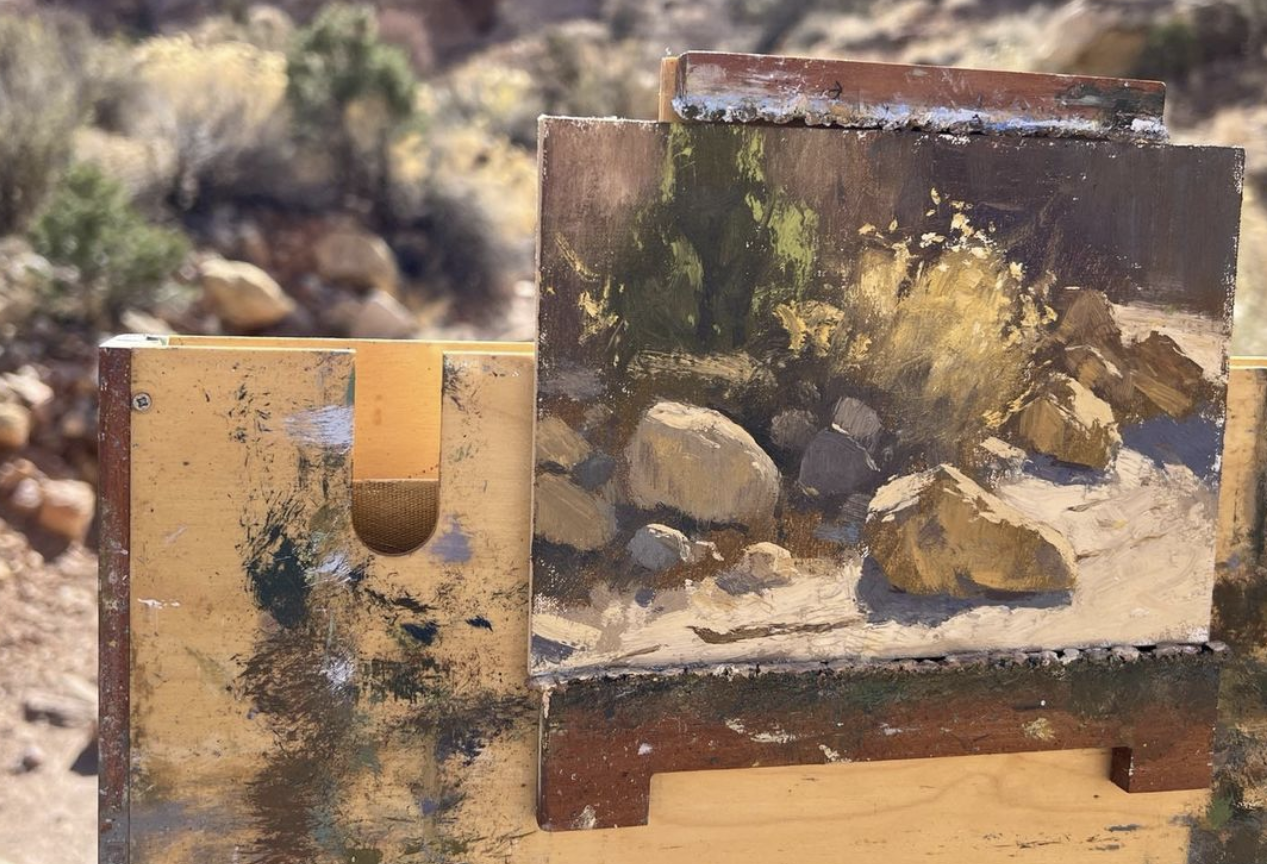
I begin a mountain or rock painting by looking at large abstract shapes. Naming every object too soon can pull me into details before I have established the structure of the painting.
See the pattern before the object
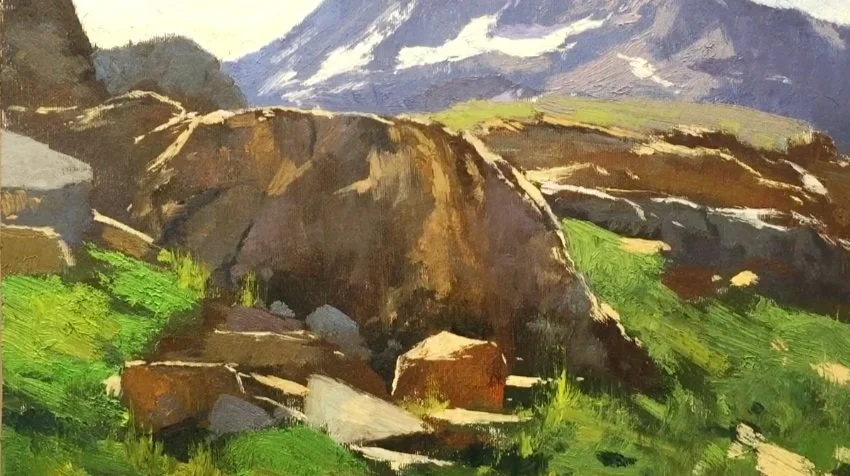
In the painting shown here, the foreground rocks, the distant mountain, and the green growth all belong to a larger arrangement of shapes. I think first about their sizes and relationships rather than trying to describe each rock individually. That gives me a clearer starting point for the whole picture.
Work from large to small
I break the larger shapes into smaller elements and work from dark toward light. For the mountain in this example, I describe using roughly three or four values. Those broad divisions do much of the work before I need to consider smaller accents. The same way of seeing applies to the rocks in front.
Keep changing light in mind
This is especially useful outdoors, where the sun moves and a highlight may change or disappear while I work. Spending longer on a painting does not automatically improve it, just as working quickly does not automatically make it impressionistic. I want the time I spend to support the large arrangement. As you watch, try looking past the names of the objects and following the main light and dark shapes instead.
For a related lesson, see using shapes to strengthen a design.