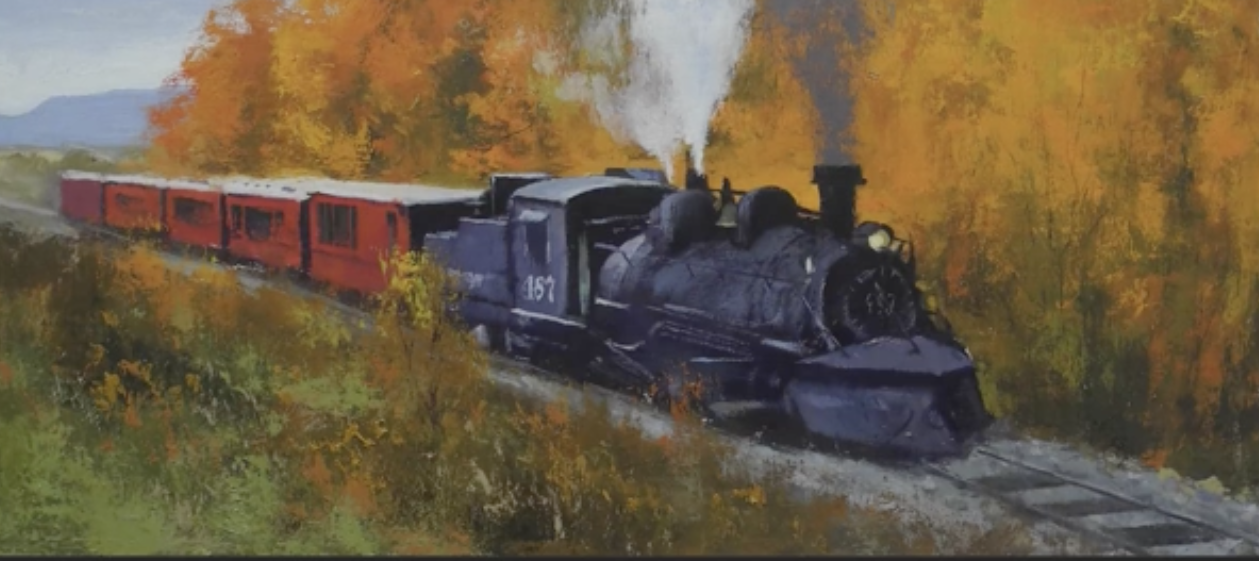
To give smoke or steam a lighter, more transparent feeling, I approach it with thin paint and build it gradually. In this short demonstration I use a digital brush over a train painting to show the difference between an opaque mark and a gentler layer.
Compare the opaque and transparent marks
Against the orange autumn trees, a solid light mark reads as a solid object. It covers the background instead of suggesting something drifting in front of it. When I lower the digital brush opacity, the trees remain visible through the mark, and the effect feels much closer to the smoke or steam I want to describe.
Build the effect gradually
The opacity control is a way of illustrating the idea; I would approach real paint by applying it thinly and easing up to the effect. I allow more substance near the source and less as the plume rises and disperses. Rather than making the entire plume equally solid, I look for those changes in transparency.
Watch what remains visible
As you watch, compare the background behind each example. The important difference is how much of that background still comes through. I also point to wispy foliage as another place where a lighter touch can help. The aim is to suggest the subject without giving it the weight of the solid tree beside it.
For a related lesson, see using thick and thin paint.